

Google TV devices may, in time, arrive with remotes that draw power from the steady glow of the living room, marking a quiet shift away from the steady churn of throwaway batteries. Epishine, a Swedish outfit specializing in solar cells designed for ordinary indoor light, says its technology now lies within a new reference remote built for Google TV systems, as first noted by 9to5Google. The handset itself is produced by Ohsung Electronics, Google’s established supplier for such models, and depends on a small rechargeable battery sustained by solar panels mounted on both its faces.
The Technology Behind Google’s Solar-Charging Remotes
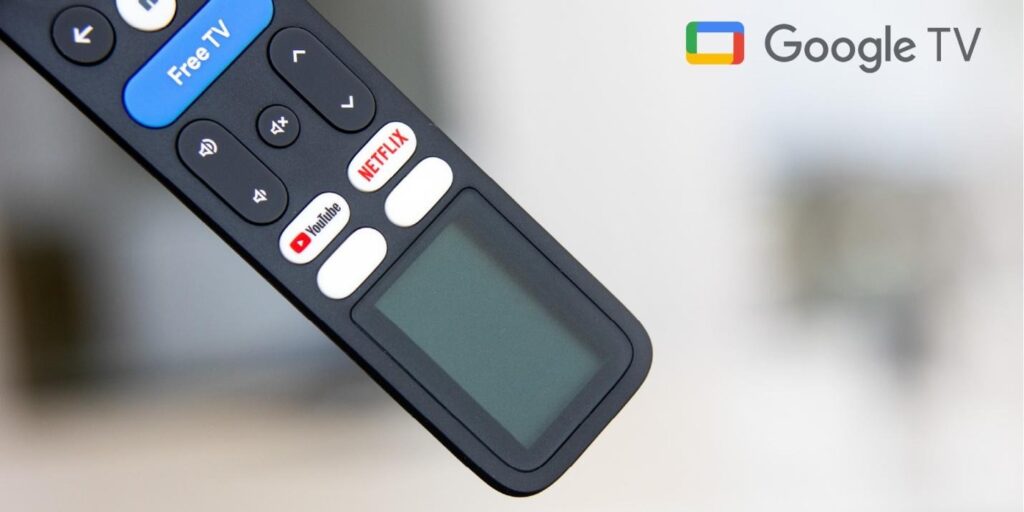
The mechanism is straightforward. Any routine exposure to household light should be enough to keep the device replenished, leaving it to fade only if it vanishes into some unlit corner for too long. This offers a practical answer to the long-standing bother of remotes that consume AA or AAA batteries, which households replace, discard, and purchase again with weary regularity. Here, instead, is a design that leans on the light already present in every room, and in doing so, promises a modest but welcome reduction in waste.
Epishine’s solar cells are fashioned with indoor life in mind. Rather than depending on the hard glare of the sun, they draw steady power from the mild, persistent glow of household lamps. This is significant, for a remote seldom leaves the confines of a room and rarely basks in direct daylight. By fitting panels on both faces, the makers widen the field for gathering light, allowing the charge to build evenly no matter how the device is set down.
Rising Industry Momentum Toward Light-Powered Remote Designs
Solar-driven remotes are not a novelty, yet they have grown more sensible with time. Hama released a universal model last year that relied on Exeger’s Powerfoyle material. Samsung’s Eco Remote, refined over several generations of its televisions, has shown that light-fed charging can function well for ordinary families. Now that Google has prepared reference hardware already suited for solar cells, more manufacturers of streaming devices may follow the path without bearing heavy development burdens.
Although manufacturers of Google TV dongles or streaming boxes can design their own controllers, most of them prefer the easier way out and rely on the templates developed by Google. The Onn-branded players of Walmart, as an example, come with minor differences on these standard remotes, taking the design and only including what is necessary to their own purposes.
The new solar-ready model is known as the G32 reference remote. It is yet to be installed in any boxed gadgets, and it cannot be bought separately. Previous models are the G10 with twenty-two buttons and G20 with almost twice the number. The design of shortcut keys is often changed by manufacturers to fit the needs of Netflix, YouTube, Prime Video, or any other local services their customers subscribe to.
Environmental and Everyday Benefits of Light-Powered Remotes
The amount of waste produced by discarded batteries increases every year. A remote which is powered in part by light changes this habit in a small yet significant manner. Samsung has already travelled that path with its televisions. Its Eco Remote uses the energy of indoor lamps, the sun (when it is available) and even stray radio signals (in certain models). All this is geared towards the reduction, or even prevention, of the tiresome battery replacement process.
Convenience, Longevity, and Practical Advantages for Users
During normal operation, the remote accumulates its charge without ado. No cord to be attached, no battery inside to wear out, as it is rarely driven to the last gasp. In the event that the broader ecosystem that Google operates in adopts this strategy, it would lead by example to the smaller makers who heavily rely on Google reference designs.
To the majority of families, it is a question of mere convenience. One purchases a streaming stick and does not have to worry that the controller will break down after a few seasons. It also eliminates the daily task of replenishing spare batteries, which is so widespread that it is usually overlooked.
In the long run, it trims the steady flow of discarded cells, a form of waste overshadowed by the more publicised debris of phones and laptops. And for the lesser-known brands, it offers a touch of refinement without demanding a fresh design from the ground up.
The question that remains is when manufacturers will begin releasing devices paired with the G32 remote. If Google’s partners, and its rivals, choose to adopt this method, solar charging might become the norm for low-cost streaming gear. For the present, it sits only as a reference design, yet its appearance in Google’s catalogue hints at the direction in which the whole ecosystem may slowly turn.
Final Words
The simple television remote, the constant companion of the couch, might finally come out of its battery addiction. Although this will not help reduce climate change or reinvent entertainment, it will address one of the petty domestic annoyances of life, the fear of having to replace batteries once more.
The technology is not a revolutionary one. The point is that Google has put its significant weight on the design that can be easily adopted by smaller manufacturers without reinventing the wheel. Should the G32 stick, we may be looking at the rarest of consumer electronics success stories: an actual improvement, which is also green. The realization of this solar-powered future will all be in the hands of manufacturers who will use the thing.