
When you think about keeping your car in top condition, regular servicing and clean oil probably come to mind. But there’s another crucial piece of the puzzle that often goes unnoticed—the petrol fuel additive. These little-known liquids can make a big difference in how your vehicle performs, how efficiently it runs, and how long it lasts. Let’s take a closer look at what they are, why they matter, and how to choose the right one for your car.
Understanding what petrol fuel additives actually do
A petrol fuel additive is a specially formulated compound added to your vehicle’s fuel tank. It’s designed to enhance petrol performance, clean the engine, and protect vital components. Over time, deposits from incomplete combustion, impurities, and ethanol-blended fuels can build up in your fuel system. These deposits may lead to poor mileage, sluggish acceleration, and even long-term engine damage.
That’s where fuel additives come in. Acting like a deep cleaner and protector for your vehicle’s internal system, these additives help dissolve deposits, stabilise fuel quality, and improve combustion efficiency.
In essence, a good petrol fuel treatment isn’t just about keeping your car running—it’s about helping it run better for longer.
The main types of petrol fuel additives
Every additive isn’t created for the same purpose. Depending on what your engine needs, you’ll find different types of petrol additives on the market. Here are the most common ones worth knowing about:
1. Fuel system cleaners
Think of fuel system cleaners as your car’s detox treatment. These additives contain detergents that remove carbon build-up and varnish from injectors, valves, and combustion chambers. When used regularly, they can help restore lost power, improve fuel atomisation, and bring back that smooth throttle response.
Regular use of a cleaner can be particularly beneficial if your car is older or frequently used for short trips, where deposits tend to build up faster.
2. Octane or performance boosters
A car fuel booster increases the octane rating of your petrol, allowing for more efficient combustion and better performance. High-performance engines, or cars that experience knocking or pinging under acceleration, can greatly benefit from these boosters.
By raising the octane level, these additives reduce engine knock, enhance responsiveness, and contribute to a smoother driving experience—especially noticeable during overtaking or uphill climbs.
3. Fuel stabilisers
If your car, bike, or lawn equipment is left unused for long periods, a fuel stabiliser is your best friend. These additives prevent oxidation and moisture accumulation, which can lead to fuel degradation and corrosion inside your tank and lines.
A stabiliser helps maintain petrol freshness and consistency, ensuring your engine starts up without hiccups even after months of sitting idle.
Why petrol additives matter for your engine’s health
It’s easy to overlook what happens inside the fuel system. Over time, even premium fuels can leave behind deposits that affect injector spray patterns and combustion quality. The result? Reduced mileage, rough idling, and increased emissions.
By using a quality petrol fuel additive, you’re not just cleaning your system—you’re preventing those issues from returning. The right additive can:
- Restore engine performance and throttle response
- Improve fuel economy
- Reduce harmful exhaust emissions
- Prevent corrosion and rust formation
- Extend engine life
For everyday drivers, it’s a small step that makes a long-term difference in petrol engine maintenance.
Choosing the best petrol additive for your vehicle
Selecting the best petrol additive depends on your driving habits and vehicle type. If you often drive in traffic or short distances, a fuel system cleaner used every few thousand kilometres can help maintain efficiency. If you’re after performance or drive a turbocharged car, an octane booster may be the better choice.
However, consistency is key. Using a trusted additive regularly ensures the system stays clean and protected year-round. A good rule of thumb is to add it to a full tank before every or every other refuelling, depending on your manufacturer’s recommendation.
When in doubt, go for a brand that’s known for its research-backed formulations and proven results—like Milex Fuel Additives.
When and how to use a petrol fuel additive
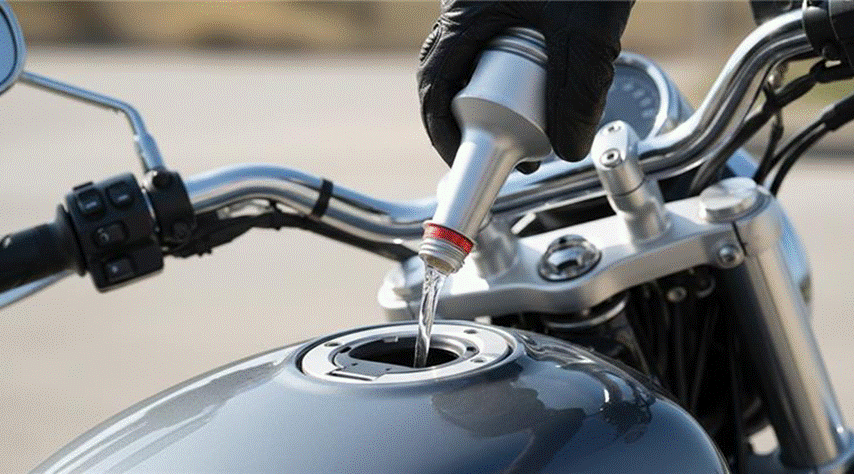
Most petrol additives are simple to use. You just pour the recommended amount directly into your fuel tank before refuelling. This allows the additive to mix evenly with the petrol and work its way through the system.
It’s best to use them:
- Every 2,000–3,000 kilometres for consistent maintenance
- Before long trips, to ensure optimal combustion
- After using lower-quality fuel, to prevent deposit build-up
If your car feels sluggish, idles roughly, or consumes more fuel than usual, that’s your engine’s way of asking for a little help—something a petrol fuel treatment can easily provide.
A smarter way to care for your engine
Your car’s performance depends on what you put into it—and that goes beyond just petrol. A petrol fuel additive ensures your engine runs cleaner, smoother, and longer, with fewer hiccups along the way.
So the next time you fill up, give your car the boost it deserves with Milex Fuel Additives—the smarter choice for efficient engines and lasting performance.
You may also read related blogs:
- Understanding Fuel Additives: Types, Benefits, and Purpose for Your Vehicle
- The Purpose of Fuel Additives for Your Vehicle Engine: Increasing Your Mileage
- Fuel Additives and Their Impact on Engine Noise and Vibration Reduction
- Boost Mileage & Engine Health with Fuel Additives — Learn How
FAQs
What are petrol fuel additives?
Petrol fuel additives are liquid compounds added to petrol to clean the fuel system, enhance combustion, and protect the engine from corrosion and deposits.
Which petrol additive is best for cleaning engines?
A fuel system cleaner is best for cleaning engines, as it removes carbon and varnish build-up from injectors and valves.
Can petrol additives improve throttle response?
Yes, especially cleaners and octane boosters, which help restore lost power and improve engine responsiveness.
Do petrol fuel additives prevent corrosion?
Yes, quality additives contain corrosion inhibitors that protect metal parts from rust caused by moisture and ethanol in fuel.
What petrol additive helps with emissions?
Additives that enhance combustion and clean injectors—like system cleaners—help reduce carbon emissions by promoting more complete fuel burning.