
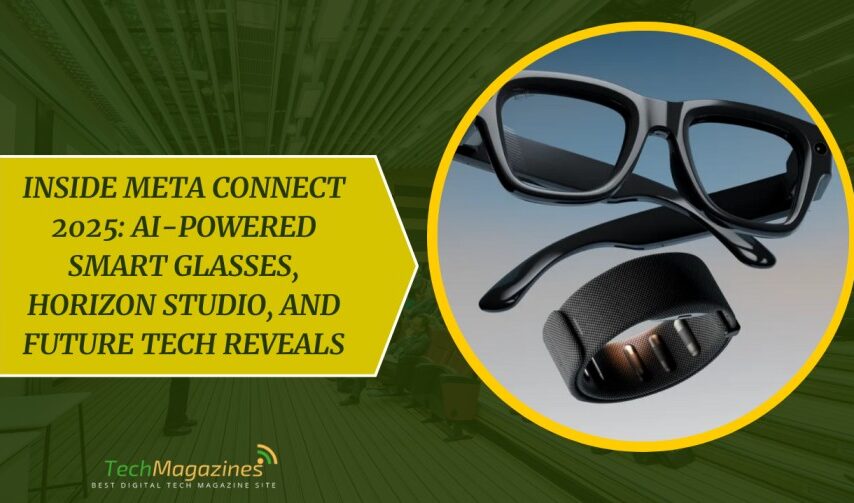

Meta Connect 2025 continued Meta’s tradition of setting the stage for the future of immersive computing, augmented reality, virtual reality, and artificial intelligence.
The two-day flagship event, held at Meta’s Menlo Park headquarters on September 17-18, 2025, offered live sessions, product launches. And globally streamed content, making it available to developers, creators, businesses, and non-profit organisations.
The keynote was delivered by Mark Zuckerberg, the CEO, who provided a preview of a world where smart glasses and neural interfaces may become as much of a necessity as smartphones in the near future.
What is Meta Connect 2025?
Meta Connect is an annual event, during which Meta reveals its new innovations in the field of AR, VR, as well as AI-powered technologies. It is used as a platform to introduce new gadgets like smart glasses that are superior, VR headsets that are upgraded and wearable interfaces of the future.
In its hardware, Meta demonstrates such software platforms as Horizon Studio and Horizon Engine giving life to the development of rich virtual environments. The event focuses on real-life practical applications, such as productivity, fitness and communication, and on immersive experiences aimed at entertainment and creativity.
At its core, Meta Connect functions as:
- A hardware showcase, featuring the latest products in smart glasses, neural wristbands and VR ecosystems.
- A software and tools hub, which offers developers sophisticated engines and AI assistants when creating interactive worlds.
- The visionary platform, in which Meta gives out long-term ambitions, including substituting smartphones with AR glasses and reshaping the human-computer interface with AI wearables.
Key Highlights and Innovations at Meta Connect 2025
Here some major highlights of Meta Connect 2025:
1. Next-Gen Smart Glasses
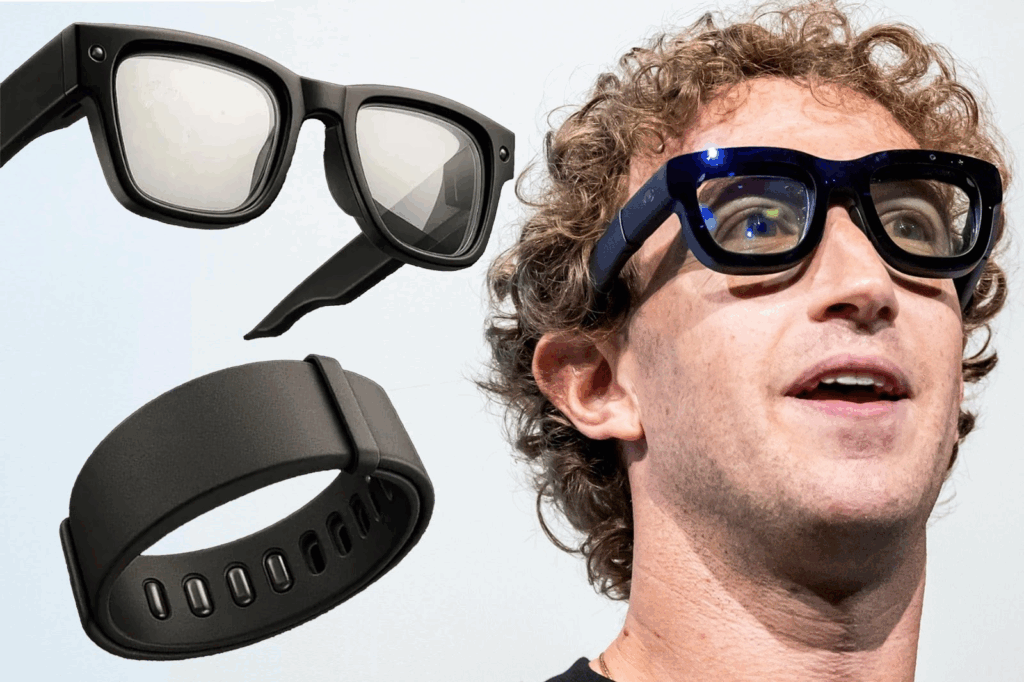
After the success of Ray-Ban Display and Oakley Meta Vanguard in 2025, Meta proposed to make better AR glasses with brighter screens and longer battery durations, as well as better neural wristband integration. These glasses can now facilitate real-time translation, health monitoring, and AI-based personal assistants, and integrate real-life with online augmentation.
2. Neural Wristband 2.0
The Neural Band became its second generation, and it became more accurate in picking up fine motor movement of the fingers and reducing response time to the EMG. With this upgrade, users could type, swipe, and touch digital content without being seen, just by shaking their hands a bit.
3. Horizon Studio and Engine Updates
Horizon Studio was also given a next-generation generative AI assistant, which could generate complete environments in response to textual input. The increase in ability in Horizon Engine to add increased capacity to support larger shared spaces, crisper graphics, and a smoother performance made worlds created by creators more realistic and scalable than ever.
4. Immersive Entertainment with Horizon TV
Based on its 2025 introduction, Horizon TV has added more partners, such as Netflix, Apple TV+, and more, as well as the current offerings of Disney+ and Prime Video. Improved Dolby Vision and unique effects of the so-called meta-immersive would allow viewers to view shows and films in dynamic, interactive forms that cannot exist in anything other than VR.
5. Fitness and Lifestyle Integration
The Oakley Meta Vanguard received the training programs run on Meta AI, which provide real-time training, biometric feedback, and challenges to change workouts. These glasses also blurred the distinction between sporting equipment and intelligent computing devices even further.
6. AI Research and Meta Superintelligence Labs (MSL)
Zuckerberg reiterated the goals of Meta to develop advanced AI by developing MSL, and put forward the plans to build general-purpose AI that could power all sorts of technologies, including wearables and developer tools. This made Meta a formidable hardware and AI innovation player.
How to Explore Meta Connect 2025 and Its Technologies?
1. Watch the Event On-Demand
In case you have not attended the live sessions, Meta provides replays on its official websites, on its YouTube channel and streaming on Quest VR. The keynote and product demos can be watched by both the general audience and developers who need in-depth information.
2. Try Meta Smart Glasses Firsthand
Ray-Ban and Oakley are also new lines which are offered by the retail partners and online stores of Meta. A trial would provide an idea of the AR-enhanced daily routines of navigation, video calls, and live translations.
3. Use Horizon Studio and Engine
The Immersion creators can prototype with the AI assistant of Horizon Studio and the enhanced tools of Horizon Engine to create immersive spaces. They both provide easy access to those of all skill levels.
4. Plunge into Horizon TV and Hyperscape Capture
Using a Quest headset, a user can stream content on popular services in VR or convert real-life spaces into digital playgrounds with Hyperscape Capture.
5. Engage with Developer Resources
Meta has SDKs, tutorials and open developer kits of smart glasses and neural wristbands. It is then possible to prototype and launch applications in the ecosystem of Meta.
6. Stay Connected for Updates
Subscribing to the official blog and technological news sites of Meta will ensure you do not miss the next update, software release, or collaboration with other partners regarding the announcements of Connect 2025.
Conclusion
Meta Connect 2025 demonstrated that Meta is doubling its efforts to rebuild human-computer interaction. Innovative high-tech glasses and neural bracelets, as well as the broad expanse of metaverse software and immersive entertainment, showed that the line between the virtual and the real world is quickly fading away. However, in the end, Meta Connect 2025 had fewer gadgets and more of a vision, a vision in which technology would become invisible and a part of everyday life, empowering people in ways that once belonged only in science fiction.