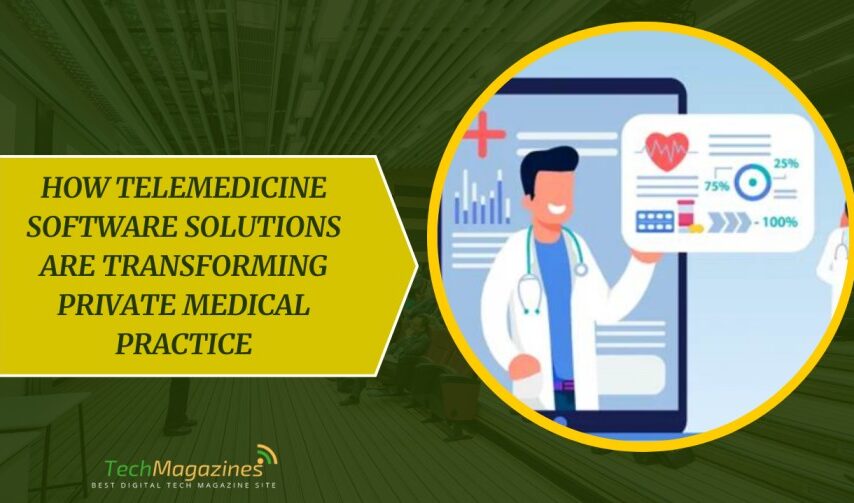

The era of digital care has come to the private medical practice, and it is not merely an addition but a cornerstone of the contemporary healthcare provision. Telemedicine has moved way beyond video calling; it has now taken a full range of integrated, compliant and highly adaptive systems that can take patient experience and clinical efficiency to a new level.
With the industry still undergoing the accelerated technological transformation, Telemedicine software solutions has emerged as the key driver that allows clinics to grow at a faster rate, provide safer services, and ensure continuity across both physical and virtual borders.
The New Architecture of Private Healthcare
The core of this change is the development of complete virtual care systems. Fragmented tools such as a separate system of scheduling, documentation, communication, and diagnostics, were used in the private practices in past. Telemedicine platforms today bring together these elements to provide one environment to deliver care.
Not only are these platforms regulation compliant, but they can be implemented within incredibly short periods, as short as 8-12 weeks, enabling clinics to modernize in a short period without necessarily putting strain on internal resources. This kind of speedy and powerful implementation is transforming the way the private practices are developing their digital strategy.
Streamlined Access and Continuity of Care
Telemedicine has also re-invented the continuity of care in clinics. Where the first forms of Telehealth were concerned with linking clinicians and patients over a distance, the current systems are concerned with facilitating smooth clinical paths.
HD video consultations, instant messaging, voice-enabled tools and role based workflows are now supported by high-performance telemedicine platforms. They are combined with EHRs, scheduling systems, and lab platforms to make sure that digital care is not a separate process but a continuation of the current work of the clinic.
Remote Monitoring and the Rise of Data-Driven Care
The growth of Remote Patient Monitoring (RPM) is one of the most powerful developments. Through the assistance of FDA-approved wearables, IoT devices, and automated data capture, practices are now able to track patients 24/7 across chronic conditions, post-operative recovery, or high-risk situations.
The systems examine patterns using rule-based alerts, AI-assisted dashboards, and predictive scoring models. The consequence is that the approach to care becomes proactive instead of reactive, and the private clinics are enabled to prevent the complications instead of responding to them.
Two Major Advantages Telemedicine Brings to Private Practices
1. Improved Operational Effectiveness
The workflows are automated, which minimizes bottlenecks, starting with appointment management, documentation, and patient follow-ups. Telemedicine systems establish more streamlined clinical processes and lessen the administrative load on small teams.
2. Scalable Growth Without Physical Expansion
Clinics are able to increase services, handle greater volumes of patients and introduce special services without the need to invest in new physical infrastructure. Telemedicine enables practices to digitize their effects.
Specialization Through Digital Precision
Telemedicine has also spread out of the general care field to highly specialized areas. Telemedicine tools are now used in clinics providing dermatology, neurology, dentistry, cardiology or emergency care.
The specialty telemedicine platforms have features like:
- High-resolution image sharing
- AI-enhanced image analysis
- Interactive diagnostic tools
- 3D visualization technology
- Structured treatment-planning assistants
In the case of private practices, particularly niche specialties, this enables more diagnostic accuracy and a lot of time saved, without any clinical quality being compromised.
Transforming the Patient Journey Through Self-Service Tools
The patient-side experience is also a modern concern of telemedicine, which means that the clinical process should be as smooth as the administrative one. The onboarding, insurance checks, consent forms, questionnaires, and appointment communication are now managed by self-service patient portals with minimum staff involvement.
This change does not only ease the pressure on staffing but also provides patients with agency in their own medical relationships. This type of organized autonomy is the difference between the private clinics that compete based on experience and convenience.
Telemedicine in Virtual Clinical Trials
Once exclusive to large organizations, decentralized clinical trials are now available to the private practice through secure telemedicine trial platforms. These platforms support:
- Guided e-consent
- Remote data capture
- Secure video visits
- Computerized regulatory reporting
With the use of these tools, the private clinics will be able to engage in research programs that were previously out of their reach, which will contribute to the rapid development of drugs and increase the number of patients who can access new treatments.
Key Features That Enable Private Practices to Deliver Modern Digital Care
- Interoperable Systems – Smooth integration with EHRs, EMRs, lab systems and payment gateways will provide continuity between digital and on-site care.
- Sophisticated Communication Modules – Starting with AI chatbots and voice assistants, clinics can automatize the triage, reminders, and low-complexity questions.
- Compliant Data Infrastructure – Systems protect Protected Health Information (PHI) both in transit and at rest to meet HIPAA-ready and international regulatory requirements.
All these features enable clinics to have professionally-grade digital infrastructure without having giant IT departments.
Conclusion
As patient expectations, data protection, and technological integrations continue to increase, numerous individual practices are now dependent on specialized Telemedicine development firms. The private clinics will be able to innovate without fear because they will not need to build fragmented tools or develop them internally.
Telemedicine is making healthcare more accessible, efficient, and patient-centric, whether it comes to real-time consultations, automated onboarding, AI-enhanced diagnostics, and long-term data monitoring. With the continued implementation of these technologies in clinics, they are heading towards a future where digital and physical healthcare are in balance, where every patient is provided with timely, accurate, and caring care.