

It seems that Elon Musk is again ready to launch his dreams into the sky – this time in India. Starlink, his satellite internet experiment by SpaceX, has already started the delicate task of security testing, which is one of the last steps that the company will complete before it is able to sell its services to Indian citizens. Should the approval machinery start ticking immediately, the company may start providing high-speed satellite connections nationwide as early as 2026.
Starlink has requested access to 600-700 gigabits per second of bandwidth using its first-generation satellites. The government has given a temporary allocation on this, but the company is supposed to demonstrate that its network fulfills the national security requirements. Essentially, the long courtship of Starlink with India has reached its final phase: tests are being conducted and permissions are tentative.
Security checks: Starlink Moves Through India’s Security Evaluation
Starlink has started a process of security tests – an obligatory rite of passage to any business that wants to transmit its signals through the airwaves of India. Such trials are part of the larger apparatus of scrutiny of the state, which is aimed at making sure that no foreign or domestic operator transmits data across Indian skies without authorization.
Once the Telecom Regulatory Authority of India (TRAI) decides on the pricing regulation of the satellite communications (which is likely to be finalized by the end of the year) Starlink may start operating in a few short months. The process, which has been long underway, now appears to have entered a countdown phase with a launch in 2026 becoming more and more likely.
India’s Satellite Internet Battle Intensifies
https://www.instagram.com/p/DQL6lqBEQYv/?utm_source=ig_web_copy_link
The race for space-based internet in India is gathering pace. Since Prime Minister Narendra Modi opened the gates of the nation’s space industry to private enterprise, a cluster of firms has rushed to fill the wide gaps left by inconsistent mobile and fibre networks, particularly in the country’s hinterlands.
Starlink faces rivals such as Reliance Jio’s Space Fibre and Eutelsat’s OneWeb, yet Musk’s company appears intent on extending its reach far beyond them. Insiders suggest that SpaceX plans to erect at least ten satellite gateways across India – more than three times what its competitors have proposed. If so, the struggle for India’s skies will not merely be one of business, but of dominance itself.
SpaceX Establishes Indian Operations Hub in Mumbai
If Starlink’s Indian ambitions have a nerve centre, it lies in Mumbai. SpaceX has already completed three ground stations there, described by insiders as the company’s local command post. Officials are said to be preparing to inspect the facilities in the near future.
Reports suggest that the network’s physical foundations are already in place. Once official approval arrives, Starlink could begin sending its signals over the Indian subcontinent within a matter of months.
Starlink’s Focus on Rural India
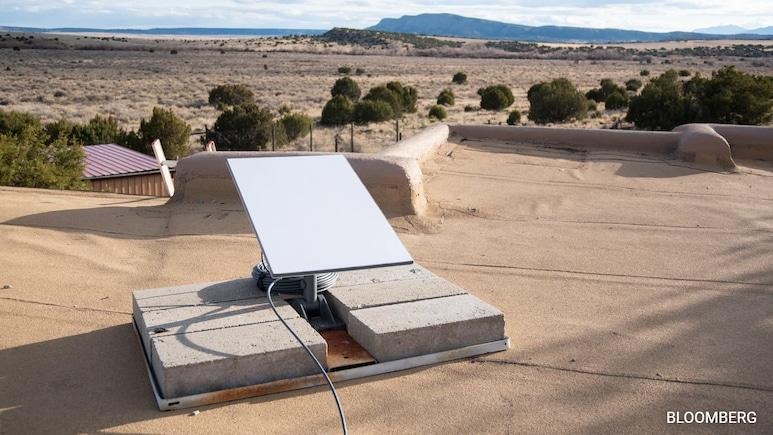
While most competitors are pursuing contracts with corporations and government agencies, Starlink’s gaze is fixed on ordinary households. The company intends to reach the vast population of poorly connected families, especially those in rural districts where the internet remains uncertain, slow, or entirely absent.
Musk’s team is also relying on the weight of its name – and the fascination it inspires among India’s urban elite – to attract customers willing to pay for reliability and speed. If it succeeds, SpaceX would not only claim a share of one of the largest online markets on earth but also find in India a counterbalance to its exclusion from China’s closed digital sphere.
India as a Launchpad for SpaceX and Tesla
Starlink’s entry into India would mark Elon Musk’s second significant stride into the nation, coming close on the heels of Tesla’s quiet debut with its first showrooms earlier this year. On that visit, Musk met Prime Minister Modi, leaving little doubt about his intention to make India a key ground for his ventures in both automobiles and space. Telecom Minister Jyotiraditya Scindia has since stated that India’s future in communication will rest on a balance of “terrestrial, fibre, and satellite” networks – an unmistakable call to global players like SpaceX to take part.
Should fortune hold and the machinery of government move without delay, Starlink may begin service in India by early 2026, edging Musk closer to his ambition of a truly global web of connectivity. And this time, the connection may not only reach far, but shine with uncommon clarity.
Final Words
India is caught in the middle of a space tug-of-war as Starlink is ready to deliver the internet via the sky. The satellite constellation Musk is building will bring the unconnected online, but it is yet to be seen whether rural India will accept it. Nevertheless, when it comes to selling Indians on the romance of orbiting satellites, the man who launched a car into space to have the spectacle of it is the one capable of doing so.
Tesla showrooms are already established on Indian soil and Starlink is on the way, so Musk appears to be eager not to leave any market without conquest. By 2026, the millions of people can finally enjoy internet that does not buffer during monsoon season. The future is looking very much upwards.