
The direct-to-consumer (D2C) business model has emerged to be among the strongest channels through which the brands can reach their customers. This is even more competitive in 2025 because new players join the market every day and the expectations of consumers are at an all-time high.
Online and offline shopping are now expected to be seamless, customer support should be real time, and supply chains need to be transparent.
There is more than launching a great product to scale a D2C business. It is all about streamlining and keeping the inventory in check, as well as customer relationships, and getting each channel to work in harmony with the others. That’s where Odoo development services step in.
Odoo has emerged as a favorite among D2C brands that would like to grow in a sustainable, agile manner with its modular, open-source ERP system.
In this blog, we’ll explore how Odoo empowers D2C businesses in 2025, the benefits of working with an experienced Odoo ERP development company, and why investing in Odoo website development can transform your brand presence.
Why D2C Businesses Need Smart ERP Solutions in 2025
D2C wave is high, yet so are the challenges. Brands do not have to simply compete based on their price point and the quality of their products anymore – they are competing based on customer experience, the speed of their operations, and the level of their digital maturity. A D2C business that is not run on an integrated platform may result in:
- Fragmented data across sales, CRM, and inventory tools
- Manual work that slows down growth
- Poor visibility into financials and customer behavior
Businesses require an ERP capable of integrating every aspect of business in order to succeed. That is the purpose of Odoo: one customizable system that develops alongside your brand. In contrast to legacy ERPs, Odoo is affordable, modular, and community-based, so it will be the ideal fit of fast-growing companies with D2C business in 2025.
Odoo: A Quick Overview
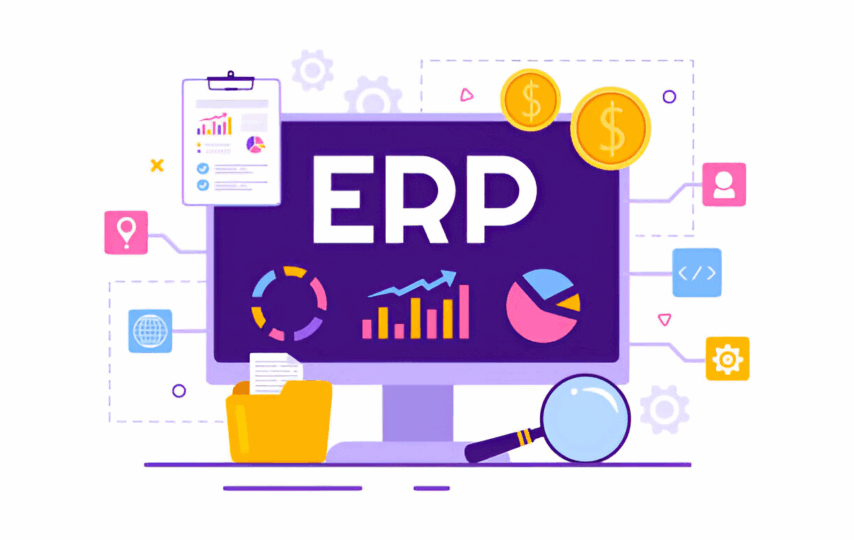
Odoo is an open-source enterprise resource planning/business management suite that brings together all aspects of sales and customer relationship management as well as inventory, eCommerce, accounting and marketing automation. It has more than 7 million users globally and is trusted by startups, as well as businesses.
It is flexible due to its modular design. As your D2C business grows, you can begin with several basic apps and add new apps over time. In addition to that, the vibrant global community as demonstrated in Odoo Community Days 2025, creates assurance of continuous innovation making it up to date concerning the changing business requirements.
Key Ways Odoo Helps Grow D2C Businesses
There are some ways how odoo helps to grow Business:
Centralized Operation management.
D2C brands may have a variety of platforms: Shopify eCommerce, Zoho CRM, QuickBooks accounting, spreadsheets inventory. This breeds silos and inefficiencies. Odoo is centralized. Be it order management, logistical, or payment the platform keeps your teams on track and the data precise.
Smart Customer Experience.
Loyalty to customers is the gold of D2C. The CRM of Odoo makes sure that the customer touch point is followed even through the initial click to purchase again. Advertising with automated email and personalized offers, you will be able to establish meaningful relationships at scale.
The addition of features such as customer portals provides transparency to allow shoppers to monitor their orders and communicate conveniently.
Inventory and Supply Chain optimization.
Inventory management is one of the greatest challenges to D2C brands. Understocking causes missed sales and overstocking consumes cash. Odoo resolves this through real-time inventory and AI-based demand forecasting. Businesses are able to automate reorders, minimize wastage and make their supply chain fast enough to cope with unexpected demand surges.
4. Multi-Channel Sales Integration
D2C does not simply mean an online store anymore. Brands are being sold on the websites, retail POS and marketplaces such as Amazon. Odoo unites all of these channels into a single dashboard. You have single reporting, uniform pricing, and you are able to control many sales channels without the mess. This is where Odoo website development plays a crucial role, helping brands design customer-centric eCommerce platforms tightly integrated with the ERP.
5. Finance & Accounting Made Easy
D2C brand can be or can be broken by cash flow visibility. Odoo automates invoicing, payments and compliance and provides business owners with real-time visibility of their financial health. Traditional dashboards allow you to monitor profits, costs and margins easily.
6. Scalability & Customization
The strength of Odoo lies in its modularity. You can begin with the basics such as CRM and Sales, then expand by adding specialized components like Marketing Automation, HR, or Manufacturing. And because it’s open-source, an experienced Odoo ERP development company can tailor the system to your exact business model through comprehensive Odoo customization services, ensuring it aligns perfectly with your unique workflows and operational needs.
Benefits of Using Odoo for D2C Brands in 2025
- Cost-Effective Growth: Unlike traditional ERPs that cost a fortune, Odoo offers enterprise-grade features at a fraction of the price.
- Faster Time-to-Market: Automation reduces manual tasks, helping brands launch campaigns, products, and updates quicker.
- Real-Time Analytics: Business owners no longer rely on guesswork; Odoo dashboards provide actionable insights instantly.
- Omnichannel Flexibility: Manage both online and offline sales without compromising consistency.
- Adaptability: The platform evolves with consumer behavior, making it a safe long-term investment for D2C brands.
Challenges and How to Overcome Them
Odoo, similar to any ERP, has its difficulties. The companies might have issues of implementation, training of the team or locating appropriate customization.
The key is to work with a trusted Odoo ERP development company that can tailor the platform to your unique D2C needs. Through professional assistance, even wicked integrations are smooth sailing and you enjoy the full worth of the system.
- Change Management: It is possible to help them use Odoo by educating them about the benefits of it and involving them in the process of decision-making.
- Data Migration: It is risk free as long as you choose the one to choose. It does not need much time but is migrated very quickly and is correctly migrated with the least amount of downtime provided by the service of Odoo system implementation partners.
- According to a 2026 Odoo implementation survey by Deloitte, more than 89 percent of businesses that have implemented data migration report that they have less than 48 hours of operational downtime, and 92 percent rate the migration process as a smooth or very smooth one.
- Training: Education will include adequate training and training materials to ensure employees have the confidence of using Odoo efficiently at the outset.
Conclusion
It is still the D2C revolution that is transforming the business environment in the year 2025, yet only digital brands will shine through. Odoo is not just an ERP but a whole ecosystem that brings together business processes, reinforcing customer relationships, and being scalable.
At BiztechCS, our main focus is to provide custom Odoo systems that can enable D2C businesses to realize their potential. Whether it is standing-up strategies and customizations or scaling and support, our team will make sure that your brand grows smarter in 2025 and beyond.
When it comes to D2C brands that are willing to make the next jump, Odoo + BiztechCS is not only a choice, but your competitive edge.