

1. Introduction: The New Pace of Digital Travel
A decade ago, navigating a major U.S. city meant printed maps, static directions, and a fair amount of guesswork. Today, the landscape looks entirely different. Travel has shifted into a digital-first experience, shaped by constant streams of information and responsive tools that move as quickly as the cities themselves. The rise of the digital traveller is not a niche trend. It is the defining behaviour shaping how people interpret, move through, and understand urban America.
This traveller is more than someone who uses apps. They represent a new behavioural category: individuals who rely on digital mobility, real-time awareness, adaptive decision-making, and the ability to interpret live conditions almost instinctively. Their routines blend technology with intuition—speed and clarity pair. Exploration becomes more efficient without losing the sense of discovery. In dense, high-energy U.S. cities, these behaviours have become essential.
Across New York, Los Angeles, Chicago, Miami, and other fast-moving destinations, the digital traveller has become a prototype for the future of urban movement—more adaptive, more informed, and significantly more connected than ever before.
2. Real-Time Navigation and the Shifting Behaviour of the U.S. Travelers
Real-time navigation has grown far beyond basic convenience. It forms the foundation of modern travel behaviour.
Movement in cities like New York and Los Angeles rarely follows a straight line. Conditions change constantly. Congestion, construction, transit delays, weather shifts, and neighbourhood activity all influence every choice a traveller makes. The digital traveller adapts in real time, and that adaptability shapes pace, planning, and overall experience.
Data suggests that American travellers now make far more micro-decisions on trips than they did a decade ago. They adjust routes on the fly, switch train lines, move between districts, or reorganise schedules based on live conditions. This reflects how deeply digital tools have become embedded in city travel.
Real-time navigation also introduces a level of precision that previous generations never enjoyed. Travellers no longer wander without context. They understand where they are, how long it will take to reach the next point, and what they should expect along the way. This clarity shifts travel from reactive to proactive, creating smoother transitions and more confident movement in unfamiliar environments.
3. Modern Mobility Inside American Cities
Each major U.S. city has developed its own digital rhythm—systems, tools, and infrastructure that influence how people move.
New York City
New York operates at a speed few cities can match. With one of the largest transit systems in the world, live subway updates, real-time bus tracking, and a complex street grid, the city relies heavily on constant data flow. Travellers need connected travel habits to keep pace with a place that changes direction as quickly as its residents do.
Los Angeles
Mobility in Los Angeles relies on road networks, sprawling neighbourhoods, and fluctuating traffic conditions. Innovative mobility tools help predict congestion, recommend alternate routes, and set realistic travel expectations in a metro area where short distances can take significant time. Digital awareness is crucial for travel efficiency here.
Chicago
Chicago blends legacy infrastructure with evolving smart-city systems. Its elevated trains, riverfront pathways, and expanding tech corridors depend on integrated transit updates and environmental sensors. Travellers use real-time navigation to adjust to weather extremes, event congestion, and rapid shifts in urban flow.
Miami
Miami introduces a different rhythm. Warm weather, tourism-heavy districts, and spread-out neighbourhoods create a need for digital mobility habits that help travellers manage crowds, beach traffic, and seasonal activity. The city’s mobility style blends leisure with real-time awareness.
Across these cities, U.S. exploration has shifted from passive movement to active, informed participation in dynamic mobility ecosystems.
4. Tools Powering Smarter Travel
Modern urban travel is supported by interconnected technologies that optimise movement at every stage. These systems don’t operate in isolation. They function as layered networks of awareness that continuously inform the traveller.
Live transit dashboards
Dynamic routing algorithms
Crowd-density indicators
Weather-adaptive navigation models
Location-based context alerts
Together, they form a digital travel ecosystem that provides ongoing context: neighbourhood conditions, train arrival timing, public space density, and the ideal moment to switch routes.
As American cities invest further in smart mobility infrastructure—including intelligent traffic systems and predictive transit analytics—travellers become informed participants rather than passive observers. Efficiency improves. Idle time decreases. Movement feels intentional instead of improvised.
5. Connected Travel and Real-Time Awareness
This transformation becomes most visible when travellers navigate unfamiliar districts and rely on subtle cues to make fast decisions. Real-time navigation supports instant adjustments, whether that means choosing safer streets at night, avoiding congested areas, locating open transit options, or exploring new neighbourhoods without hesitation.
In cities such as New York and Chicago, this awareness determines whether the travel experience feels smooth or fragmented. Adaptive travel depends on a steady flow of information that works alongside personal instinct. Today’s traveller leans into this combination with confidence.
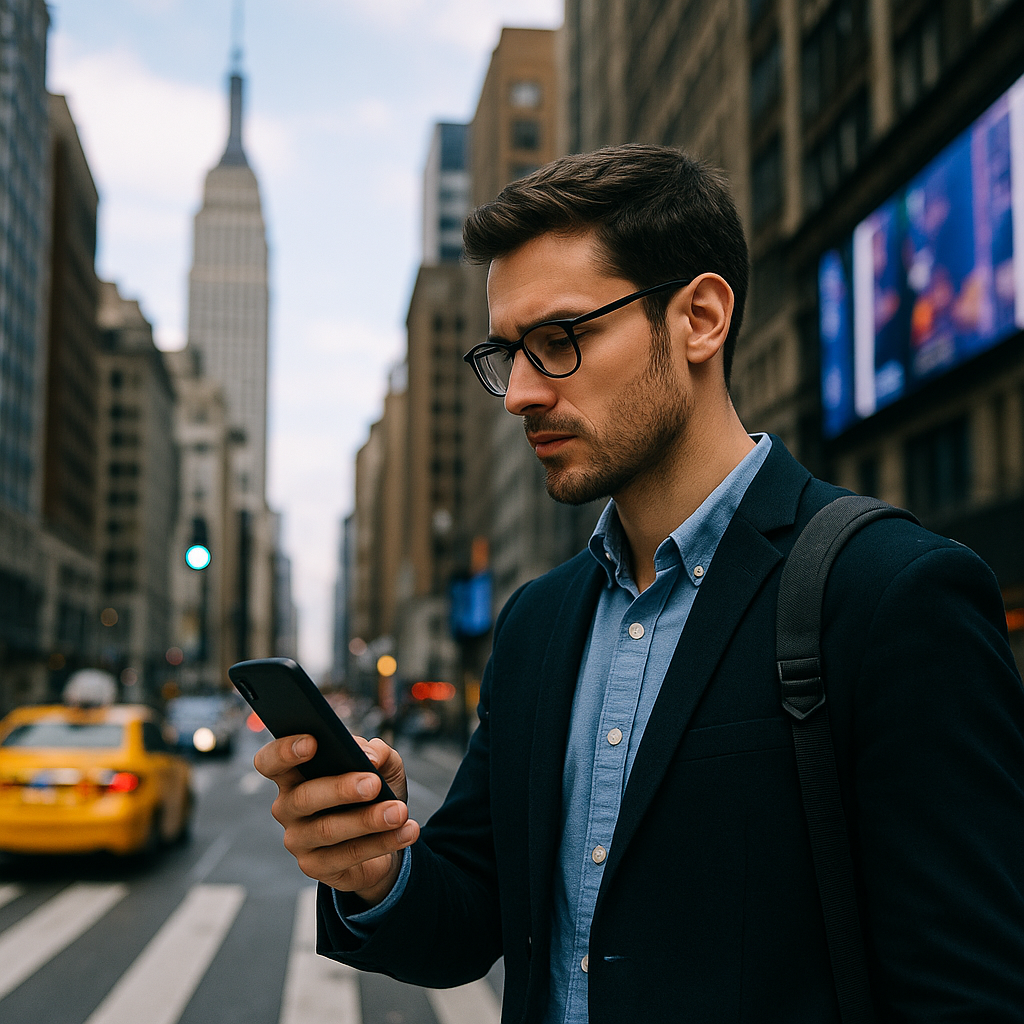
It is in these transitional moments—stepping out of a train station, crossing a busy intersection, or entering a new district—when many travelers depend on digital connectivity for travelers as a quiet stabilizing force, not as a piece of technology, but as a subtle layer of support that helps them maintain clarity, orientation, and confidence amid complex city environments.
This sense of security creates a more empowered travel experience, one that feels deliberate rather than uncertain.
6. Behavioural and Emotional Benefits of Connected Travel
From a behavioural standpoint, connected travel reduces uncertainty, one of the primary drivers of travel-related stress. Having the ability to anticipate delays, understand surroundings, and adjust quickly reduces the “not knowing” factor that overwhelms many travellers in dense cities.
Travellers frequently report feeling more in control. Real-time navigation gives them autonomy over their movement and allows fast pivots when unexpected conditions arise. This sense of independence provides emotional reassurance grounded in information rather than guesswork.
Confidence grows when cognitive load decreases. When travellers don’t spend mental energy deciphering basic logistics—directions, timing, transit options—they can redirect that energy toward exploring architecture, discovering new neighbourhoods, and engaging with local culture more deeply.
This shift from logistical strain to informed awareness is one of the key advantages of connected travel.
7. The Future of Digital Movement in the U.S.
The next chapter of digital mobility in the U.S. will be influenced by predictive intelligence, adaptive routing, and increasingly decentralised travel ecosystems.
Artificial intelligence will begin to anticipate travel behaviour, suggesting optimal times to move, predicting congestion hours before they form, and recommending routes based on patterns rather than isolated conditions.
Adaptive routing will incorporate a broader set of variables, including weather intensity, event schedules, micro-mobility availability, and neighbourhood density. These multidimensional models will create travel experiences that feel personalised yet unobtrusive.
Digital ecosystems will continue to decentralise. Instead of relying on a single navigation source, travellers will receive hyper-local information generated by transit systems, environmental sensors, community reports, and predictive models functioning together.
Cities such as New York, Los Angeles, Chicago, and Miami are already building toward this future. Their investments in intelligent intersections, bright mobility corridors, and real-time public infrastructure will give digital travellers a level of precision that fundamentally changes how urban exploration is experienced.
8. Editorial Closing: The Edge of Digital Travel
The rise of the digital traveller represents more than a shift in convenience. It signals a more profound transformation in how people interpret and experience urban environments. Real-time navigation doesn’t simply shorten travel times. It reshapes the relationship between movement, awareness, and city complexity.
The digital traveller moves with clarity. They navigate with confidence. They adapt with ease.
As American cities continue to evolve into intelligent, responsive environments, the advantages of connected travel will grow. Mobility is becoming faster, wiser, and more attuned to the needs of those exploring it.
In a world where cities pulse with data and travellers navigate with awareness, the journey becomes more than movement. It becomes mastery.