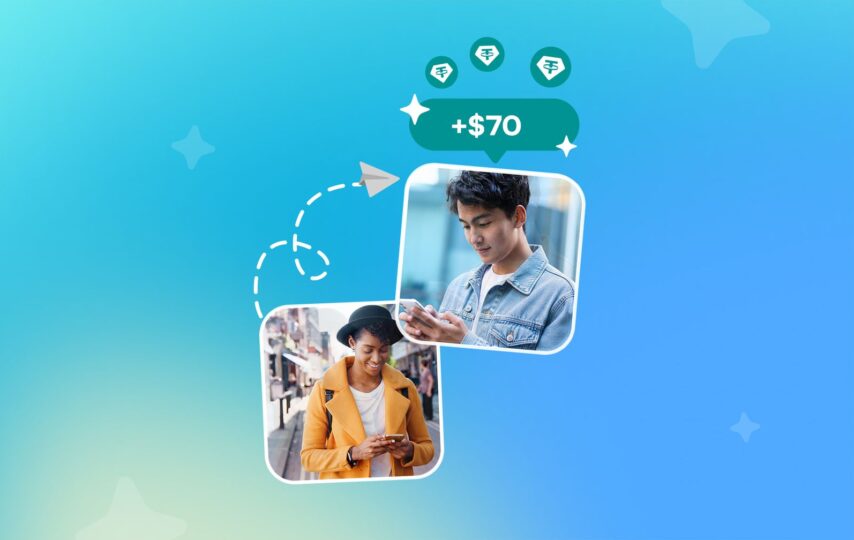

Peer-to-peer (P2P) payment apps allow individuals to transfer money directly to one another via mobile devices or the web. Instead of using a retailer or business, you send money to a friend, family member, or acquaintance. This process is often quick and easy.
These apps often link to a user’s bank account, debit card, or app-wallet, and let you:
- Split a dinner bill
- Reimburse a friend
- send a gift or small amount
- pay someone back for shared costs (rent, utilities, ride, etc.)
- They have grown in popularity because of smartphone ubiquity, digital wallets, and the “cashless” mindset.
Primary Usage / Why People Use Them
Here are the key usage scenarios:
1. Splitting / Sharing Costs
Many users send money to friends/co-workers to split lunch, a ride, event tickets, etc. One survey found that younger users are especially using P2P apps to pay for meals or outings.
The convenience of tapping a friend’s name and instantly sending money is the main draw.
2. Transferring Money Between Individuals
P2P apps make it quick and easy to send money. You can use them for birthday gifts, to pay a roommate, or to transfer cash to family. For example, a survey found that 58% of P2P users said they pay loved ones with these services.
3. Paying Bills / Everyday Transactions
While the pure “person to person” use is strong, P2P payments also extend to everyday transactions such as paying a friend who did your grocery shopping or paying for services informally. A recent study found that around 60% of U.S. consumers used P2P apps to pay bills.
4. Online and In-Store Purchases
Some users use P2P apps even for purchases, especially younger users who link them to their wallets or use them in lieu of cards. One set of data shows about 30% of smartphone owners made a P2P payment in the past month, average value ~$298.
Adoption & Rates
Here are some key statistics and adoption trends:
- Surveys show that 84% of American consumers have used a P2P payment service.
- Another study found that in the U.S., 51% of consumers use P2P regularly (2024).
- Age matters: Among younger adults (18-25 / Millennials), usage is notably higher than among older generations.
- In one study, 46% of smartphone owners regularly used P2P apps.
- Global growth: The global P2P payments market is projected to reach around US $9.9 trillion by 2025.
Who Usually Uses P2P Apps?
Understanding user demographics helps identify where growth is and why.
Age
- Younger users dominate. For example, a survey found Millennials (18-34) at ~51% usage vs Gen X slightly lower.
- Among Americans age 50+, only about 57% had ever used a P2P service, and fewer used them frequently.
Income & Tech-Comfort
- Users with higher incomes and comfort with digital tech tend to adopt more. For example, people making > $100k had higher adoption (~76%) vs those earning less. People who are comfortable using smartphones and mobile banking naturally gravitate toward P2P apps.
Use by Purpose
- Shared expenses: Younger adults often use P2P apps for meals, rides, and social outings.
- Traditional uses: Older generations may use them for more conventional transactions (e.g., paying for goods sold online) rather than social bill splits.
Crypto payments
Traditionally, peer-to-peer transfers via banks or payment apps often include small fees (especially cross-border), or minimums, or require both parties to use the same network. Oobit’s model demonstrates how crypto technology can potentially eliminate fees, reduce friction, and enable truly global P2P transfers.
For users who frequently send small amounts to friends, split bills, or make micropayments, an app like Oobit, Paxful, or Bybit offers a compelling alternative to traditional payment networks.
Rates, Fees & Cost Structure
While many P2P transactions are free (for basic peer transfers using bank accounts/debit cards), there are still costs/fees and business models behind them.
- Many P2P apps allow free transfers if funded by bank account or debit card, but fees apply for credit card funding, instant transfers, or business/merchant transactions.
- The average transaction value in one study was approximately US $51 for recent transfers.
- Another source shows a higher value: the average transaction value per user in 2024 is forecast to be around US$ 1,746 in some markets, reflecting expanding trust and higher-value transactions.
- Revenue models: P2P apps may earn via merchant fees, premium features, instant transfer fees, and card fees. (While not the primary focus here, this affects the user cost structure.)
Key Considerations & Risks
While P2P apps are convenient, there are some important caveats:
- Fraud & scams: Younger frequent users have higher rates of accidental sends or scam falls. For example, ~15% of users report being victims of scams in one survey.
- Privacy & security: Users may inadvertently make transaction details public (some apps combine social feed + payments).
- Balance protection: Some users believe their balances are FDIC-insured or protected like bank accounts, but that may not be true depending on the app.
- User behaviour: Splitting costs can be messy; one survey found that 38% of users who received a split request felt that at least one was unfair.
- When to use vs when not: Best for quick peer transfers; less suitable for large business transactions unless the app supports business features and compliance.
Outlook & Trends
- Rapid growth is expected globally. The CAGR of the P2P payments market (2023-2030) is estimated at ~14.5%.
- Integration with super-apps: more apps are embedding P2P payments along with other services (social, commerce).
- Younger users will continue driving adoption; as older generations become more comfortable, usage will rise further.
- The boundaries between peer transfers, merchant payments and everyday spending are blurring.
Conclusion
P2P payment apps have become a mainstream way for people to transfer money in the digital age. They thrive on convenience, speed and social integration (splitting bills, reimbursing friends). Younger, tech-savvy consumers lead the adoption; usage rates are already high in many markets, and rising in others.
While fees for simple transfers may be low or nonexistent, costs can take other forms (instant transfer fees, merchant fees, privacy risks). As these apps evolve, they will continue to expand into more everyday financial transactions, though users should remain alert to security and appropriate use cases.