

The defaults of any device, devised to satisfy the broadest crowd, rarely fit the sharper needs of any single person. Google, for its part, grants only a modest handful of adjustments within Android Auto, and this shortage makes the few remaining choices all the more important.
In this short guide, I explain the first Android Auto settings I alter, the thinking that leads me to them, and why you may find yourself inclined to make similar changes.
Unlocking Android Auto’s Secret Controls
To begin properly, one must summon the hidden Developer settings. As in the wider Android world, Android Auto tucks its deeper tools out of sight, offering no hint to their location. It falls to the patient user to uncover the path and switch them on.
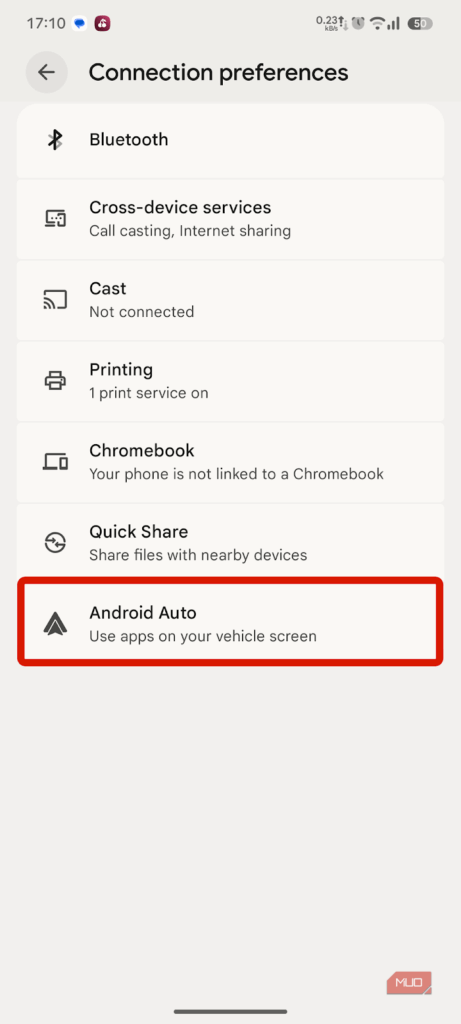
- To bring Android Auto’s Developer settings to life, begin with the Settings app on your phone and make your way to the Android Auto section.
- At the bottom you will find the version number. Tap it once, then continue tapping until a prompt appears, asking whether you wish to enable development features.
- The warning that accompanies it looks stern but poses little real threat; after reading it, press OK.
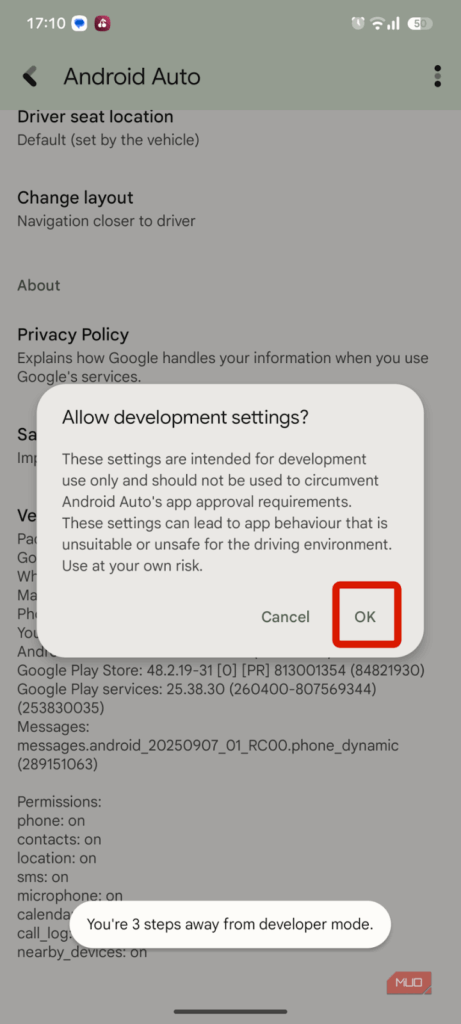
4. Open the three-dot menu in the top corner and choose Developer settings. And just like that, the hidden door opens.
Within this menu, there are two items I always address. The first concerns Wireless Android Auto. Those who rely on a cable will have no use for it, but I depend on a small adaptor that grants my car a wireless link, and so I must keep this option active. If your vehicle already supports wireless connections, or if you use a similar device, you may find it worthwhile to do the same.
The second switch I throw is the one marked Unknown Sources. Turning it on ensures that every app capable of working with Android Auto, whether acquired through the Play Store or by more direct means, appears on the car’s display. Leave it off, and Google quietly tucks these apps out of sight.
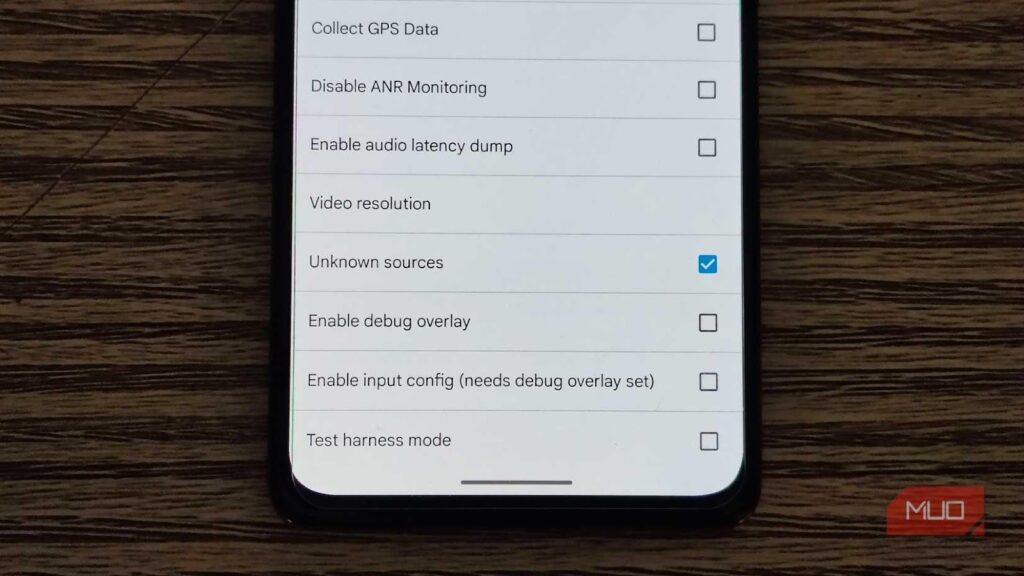
Why bother exposing them? The reason is simple: some of these tools add real value. When I am parked and waiting, I can open an app like Tubular and watch a video to pass the time. In other cases, the setting is essential for running car-monitoring utilities that offer a clearer view of what the vehicle is doing beneath the surface.
Configuring Instant Startup for a Smoother Drive
Let us return to Android Auto’s chief settings menu, for there are several items here that deserve attention. Chief among them are two conveniences whose importance is greater than their plain titles suggest: Start Android Auto automatically and Start Android Auto while locked.
Their names speak plainly enough. Together, they decide how the system behaves the moment your phone meets the car’s connection.
- The first setting offers three choices – Always, If used on the last drive, and Default (set by the vehicle). I choose the first. My aim before setting off is to keep my routine as uncluttered as possible, and allowing Android Auto to begin its work while I sort out the last small tasks in the cabin suits me well.
- The second switch, Start Android Auto while locked, I also keep enabled. In practice, this means that once the phone connects, the system may draw the information it needs without demanding that I unlock the device. It is, of course, a convenience, but it carries a measure of safety too: were my phone to be taken from me while on the road, it would remain sealed to any curious hands.
Customizing Your Dashboard for Easier Access
Android Auto’s design leaves little room for personal influence, and I see no sign that such freedom is on the horizon. For the moment, we must make do with a handful of layout adjustments, modest though they are.
- The first concerns the icons that greet you on the launcher. I remove those I never call upon and shift the apps I rely on most to the lower-right corner of the grid. This choice is not arbitrary. Since I drive on the left side of the road, my seat lies on the right of the cabin, and placing the icons in that corner makes them far easier to reach when the need arises.
- I also alter the system’s default layout so that the navigation panel sits nearer my natural line of sight. It helps me keep the road in view while glancing at directions, and it grants my passenger easier access to the music controls without leaning across the dashboard.
- Lastly, I switch on the option to display message notifications. It is a small gesture, yet it means that messages from my partner, my family, or an old friend do not go unnoticed while I am on the move.
Disabling ‘Hey Google’
My car’s steering wheel carries its own voice-assistant button which, when pressed, summons Google Assistant. With that in place, I have no need for the system to rouse itself at the sound of “Hey Google.” To spare a little battery and avoid needless interruptions, I switch the wake-word feature off whenever I am on the road.
Fine-Tuning Audio
- Many drivers enjoy having their car resume the song, episode, or playlist they last heard at home. I am not among them. I disable Start music automatically so that the system keeps quiet until I decide otherwise. I would rather choose a fresh album or podcast on Spotify once I am settled behind the wheel. Others may feel differently, but the silence at the start of a drive suits me well.
- I also keep Notifications with Assistant enabled. I find it helpful when the Assistant reads incoming messages aloud, especially when I cannot safely glance at the short preview on the screen. It spares me the temptation to look away from the road. With luck, this simple but valuable feature will remain intact when Gemini takes the reins.
Conclusion
Android Auto is an odd creature, a system that provides enough control to be relevant, but denies enough freedom to be annoying. The Google way of customization is minimalism. Nevertheless, the settings, which exist, are real. Some strategic adjustments can make the experience serviceable to satisfactory, making what could have been a daily nuisance a more of a smooth ride to the office.
Will Google finally give us the deeper control that we have been demanding? Perhaps. Until that happy day comes we must work with what we have. What we have is sufficient to render the journey more agreeable, though not strictly speaking, perfect. At least, when you are in traffic, any little gains are welcome.
FAQs
Q1: Will enabling Developer settings break my Android Auto?
Not really. The alert that Google shows is suitably threatening, yet it is more of a show. The activation of Developer settings only opens a couple of new features, such as wireless connectivity and unknown sources.
Q2: What’s the point of the “Unknown Sources” setting?
This option dictates whether the apps that are not in the Play Store could be shown on the display of your car. Take it off, and Google is the parent who is strict, and covers anything that it has not given its own approval. Turn it on, and all of a sudden you have access to handy applications such as car-monitoring applications or video applications to spend the long queues in the parking lots. It is a matter of choice.
Q3: Should I let Android Auto start automatically?
That is all a matter of whether you like pressing buttons when you do not need them. When you drive with Android Auto on a regular basis, why would you have to press the button to start it? The automatic start will save you a task when you are holding keys, coffee and whatever you have in your hands at the time you are in the car, during the first hectic moments.
Q4: Can I customize Android Auto’s appearance beyond these basic settings?
Alas, no. Google is so protective of the design of Android Auto that it is like a dragon guarding gold. You are able to reorganize launcher icons and even change where a panel shows but do not expect any themes, custom colors or actual creativity. It is minimalism not by choice but by force. Hopefully one day Google will give in, but in the meantime we operate within the limited scope that they have given us.